Friday, 7 December 2012

Chess Reviews: 208


ChessBase Magazine # 151

The new issue of ChessBase Magazine is now available and it is absolutely packed with top quality material.

Andre Schulz's Editorial is, as always, well worth a read. This time there are some strong words regarding the chess world's governing body, concluding that ''this shows once more that the balance of power in FIDE is not at all appropriate.''

The bulk of the games - over 4,000 of them - come from very notable events: the Chess Olympiad, the FIDE Grand Prix (Topalov, Mamedyarov, Gelfand...), the Grand Slam Final (Carlsen, Caruna...) and the European Club Cup. Annotators include Carlsen, Kramnik and Caruana.

Highlights in this issue include Kramnik's annotations to his victory over Aronian at the Olympiad (one of 3,300 games from the event). Here are a few simplified snippets.

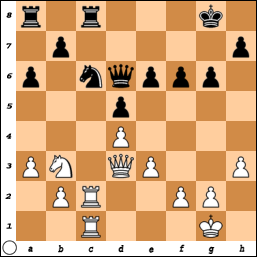
Kramnik - Aronian
22 ...Rc7? 22 Na5!

''Strangely enough there is no adequate defence anymore for Black after the following combination.''

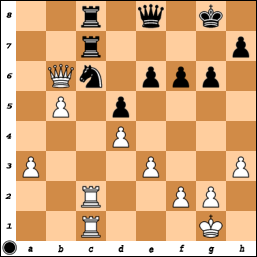
22 ...Rac8 23 Nxb7! Rxb7 24 Qa6 Rbc7 25 b4 Qd7 26 Qb6!

''The point of the combination.''

26 ...Qe8 27 b5!

''The simplest, falling into the trap :)''

.
27 ...Nxd4 28 Rxc7 Ne2+ 29 Kh1 Nxc1

''It seems that Black managed to trick his opponent, but the 31st move of White clarifies matters.''

30 Rxc8 Qxc8 31 Qc6 (1-0, 35)

I particularly enjoyed the coverage of the London leg of the FIDE Grand Prix, not least because I had to decline the opportunity to attend due to a calendar clash. It was good to catch up properly with the games and interesting to see that even players rated 2700+ can have games to forget (just like the rest of us).

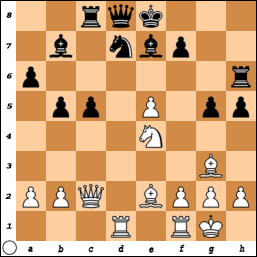
Mamedyarov - Giri
After 20 Bxh5! Rxh5 21 e6 Black could find nothing better than resigning immediately.

The features on opening play cover the following variations:

Fritz Trainer Format


1 d4 d5 2 c4 e6 3 Nc3 c6 4 Nf3 Nf6 5 Bg5 by Shirov

1 e4 c5 2 Nf3 Nc6 3 Bb5 g6 4 Bxc6 bxc6 5 0-0 Bg7 6 Re1 by Kritz

1 d4 d5 2 Nf3 Nf6 3 Bf4 e6 4 Nbd2 c5 5 e3 Be7 6 c3 0-0 7 Bd3 Nbd7 by Ris

Regular Format

English 1 c4 e5 2 Nc3 Bb4 by Stohl

English 3 d4 cxd4 4 Nxd4 e5 by Schipkov

Trompowsky Attack 2 ...e6 3 |Nd2 by Breutigam

Dutch/Semi-Slav 4 e3 f5 by Krasenkow

Sicilian 2 ...d6 3 Bc4 Nf6 4 Qe2 by Kritz

French 3 Nc3 Bb4 4 exd5 exd5 5 Bd3 by Langrock

Ruy Lopez 6 d3 by Schandorff

Slav 5 ...Bg4 6 Ne5 Bh5 7 g3 by Marin

Catalan 5 Bg2 Bb4+ 6 Bd2 c5 by Rotstein

King's Indian 4 Bg5 by Kuzmin

King's Indian 7 ...exd4 ... 10 Kh1 Nh5 by Postny

Chess players! Let's face it; nobody is going to think to buy you a copy of ChessBase for Christmas. So why not just treat yourself? You can always excuse such self indulgence with an explanation based on the excellent value for money offered by this wonderful product, and the promise that it will keep you quiet and happy throughout the festive season.

Thursday, 6 December 2012

Showaddywaddy at the Billingham Forum

.
Showaddywaddy
Billingham Forum
1.12.2012

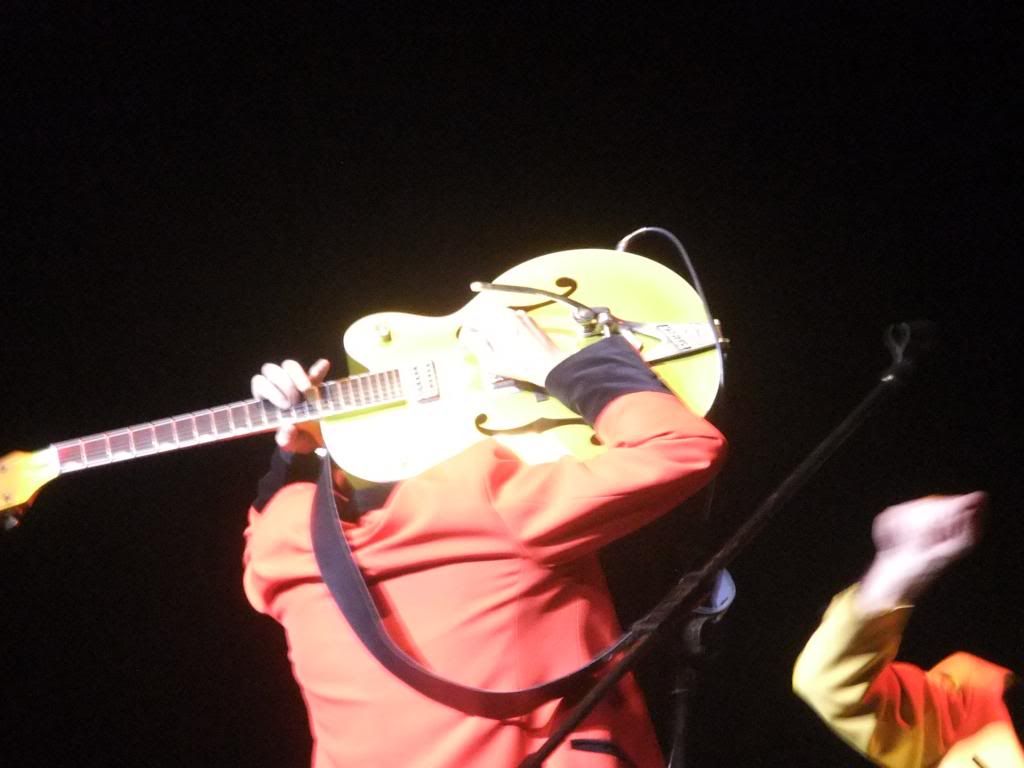
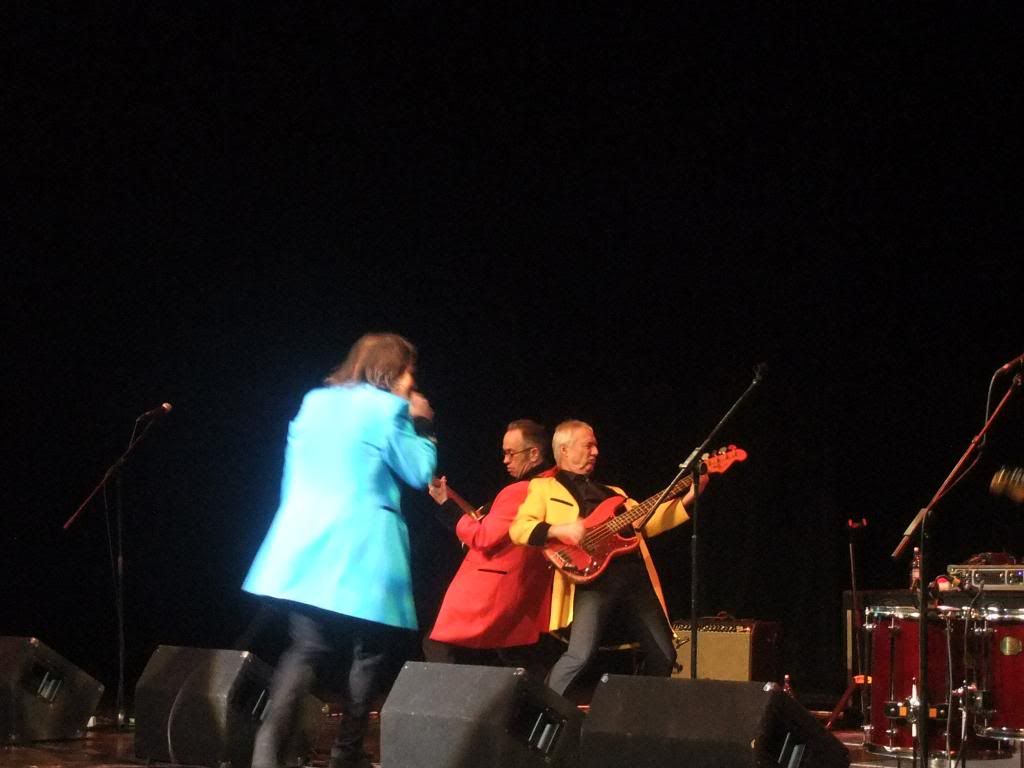
Showaddywaddy rocked Billingham last weekend with a sparkling display of high energy rockabilly, combining all of their old hits with a fine selection of cover versions.

.
I wasn't sure what to expect. Groups that have been on the road for 40 years can end up simply going through the motions and become a lazy tribute act to their former selves. Not the case here, I'm pleased to say. Indeed, the opening number - a pacy version of the Stray Cats classic Rock This Town (last seen live featuring two authentic Cats), forcibly set the scene for the rest of the evening. The tempo never dropped.

.
Two of the original band members remain: Rod Deas (bass) and Romeo Challenger (drums). They have been joined, in staggered intervals, by Paul Dixon (guitar), Rob Hewins (guitar, vocals and drums), Dean Loach (keyboards and guitar) and new lead vocalist Andy Pelos. The latter had the big shoes of Dave Bartram to fill; he retired from the front line in 2011 but continues in his role of Showaddywaddy manager. However, Andy proved to be a real showman, a perfect choice to front the band with his energy, humour and seemingly limitless ways to work the crowd.

.
So there they were, resplendent in natty Teddy Boy drapes and statutory crepe shoes, dancing like The Shadows and belting out hit after hit, including Multiplication, Why?, Heartbeat, Blue Moon, A Little Bit of Soap, Sweet Little Rock 'n' Roller, Bye Bye Johnny, C'mon Everybody, Remember Then, You Got What It Takes, Angel Eyes, When, Summertime Blues, Jailhouse Rock, Hey Mr. Christmas, Three Steps to Heaven, Under the Moon of Love, and. for the encore, Hey Rock and Roll.

.
At one point Andy invited all-comers on to the stage for a couple of songs; a potentially risky piece of business (one of them came back later - uninvited - for more of the same and was eventually removed by the stewards).

It was a very enjoyable evening and I would definitely recommend catching them on this, their 40th anniversary tour.

Here's a few more photos to conclude with.

.

.

.

.

.

.

.

.

.

Keep up to date with the latest news and tour dates over at the Showaddywaddy website.

Readers may like to know that Dave Bartram's book, The Boys of Summer - A Rock 'n' Roll Nightmare with Showaddywaddy, is soon to be published. Details can be found on the Fantom Films website.

Wednesday, 5 December 2012

Chess Reviews: 207

.
Move First, Think Later
Sense and Nonsense in Improving Your Chess
By Willy Hendricks
254 pages

''Chess players, both weak and strong, don't first make a plan before looking at candidate moves. Trial and error is a very common and in fact highly effective way to get to the best move.''

That's the opinion of International Master (and chess trainer) Willy Hendricks and it represents one of the cornerstones of this very interesting and highly original book. It presents a path to self-improvement based on the careful study of exercises (found in all 27 chapters), and a change in standard thinking methods.

The author owns up to his role of agent provocateur in the preface.

''There is a fair chance that not everyone will endorse the points of view that are developed in this book - to a considerable extent they conflict with the doctrines of mainstream chess didactics. Although the author isn't a French philosopher, he does prefer claiming the opposite rather than putting forward some small refinement.''

The intention of ''claiming the opposite'' leads to some cutting remarks about the works of some respected writers, such as Jeremy Silman and trendy target Kotov. It's all part of the provocative stance. The chapter titles should provide a further indication of the book's ethos:

First move, then plan, then judge
Look and you will see versus trial and error
My most beautiful move
Recognizing the similar
In search for the master's understanding - back to De Groot
Pattern-like knowledge
If White advances with g4, block his aggression with ...g5
Breaking news: knights are superior to bishops
Free advice
Protocol versus content
The particular and the general
Big plan, small plan or no plan at all   
Seeing combinations and making plans
Watch out, it's a critical moment
Chance in chess
The sadistic exam
It plays chess in me
Trust your chess module
Quantity is quality too
The human standard
The chess nurture assumption
The scientific scruples of the chess trainer
Quality
Expectations
Strategic exercises
Random puzzling
Conclusions   

If the chapters betray an episodic approach, then it is because some of the material has already appeared as stand alone articles in the Dutch magazine Schaaknieuws. This is a multi-layered book which can be read on several levels. One can...

1) Dash through the essays and simply enjoy the illustrative - and extremely entertaining - game snippets.
2) The same as above plus some serious hard work on the exercises.
3) Read the essays and skip the chess work.
4) Combine all of the above.

Amid the fascinating material, one occasionally comes across a square peg that has been squeezed into a round hole, such as this one.

.
Kramnik - Kasparov
Game 10, World Ch. 2000 

''Kramnik could have exchanged queens with 18 Qxd8 Rcd8 19 gxf3 Rxd4. That gives White a small advantage but virtually no chances of losing. But he chose 18 gxf3 Qxd4 19 Nb5, staying in the (riskier) middlegame. He was proved right and won quickly ...''

''Had he lost, though, the proverb on the previous page might have read: 'When ahead in score, let your opponent take the risks'. Or: 'Never change a winning strategy' - in this case Kramnik's strategy of trying to exchange queens against Kasparov as quickly as possible ... Was Kramnik tossing up between these two (or maybe even more) proverbs?''  

In fact, Kramnik didn't need to think about any sort of proverb here. It had all been played in a game Hazai - Danielsen (Valby, 1994) and was known to be very good for White (although apparently Kasparov didn't know it) so it was merely a case of bringing his preparation to the board. 

Readers of all playing strengths should find plenty of interest here, regardless of which layer of the book they decide to explore. It is, by turns, inspirational, maddening, entertaining, instructive and witty. But most of all, it is thought provoking and that seems to me to be the main point of the book.

Monday, 3 December 2012

Showaddywaddy!

I went to see Showaddywaddy last weekend, unsure what to expect. Would they still have the rockabilly magic or would they be merely a faded tribute band to their former lives?

The answer will follow in a full review, later in the week.

Here are a couple of teaser photos to be going on with.

.
.


Further Reading

The concluding part of my end-of-year round-up reviews has just been published in CHESS magazine.

.
The books reviewed are: Capablanca Move by Move, Zuka, Study Chess with Matthew Sadler, Zurich 1953 and Play the French (4th Edition).

Head here for ordering details.

Sunday, 2 December 2012

Chess Reviews: 206

Here's another round up of recent New in Chess publications.

Move First, Think Later and The Magic Tactics of Mikhail Tal will both be subjected to in-depth reviews, with a full article devoted to each one. Today we have briefer summaries of my thoughts on three other books.

.
The Powerful Catalan 
By Victor Bologan 
252 pages
New in Chess

The Catalan has never been so popular. We've definitely moved on from an era where Korchnoi was the sole Catalan flag waver at the highest levels. The early kingside fianchetto is currently a very regular sight at virtually every top tournament and is a house guest at World Championship matches.

Victor Bologan's new book adds to the growing library of literature devoted to the Catalan. As a top-level Grandmaster, his view and analysis are most welcome.

The 'complete repertoire for White' starts only after the moves 1 d4 Nf6 2 c4 e6 3 Nf3 d5 4 g3 so obviously further reading will be required to play 1 d4 with confidence.

There's coverage of all of the reasonable Black tries, from 4 ...b6 ('Queen's Indian Style'), through the Tarrasch Defence, the trendy Triangle System, the early ...Bb4+ and various tries after 4 ...dxc4 5 Bg2 (5 ...Bd7, 5 ...b5, 5 ...c6, 5 ...c5, 5 ...a6, 5 ...Bb4+, 5 ...Nc6) before moving on to the main lines with 5 ...0-0.

The recommendation for White is to play 6 0-0 dxc4 7 Qc2 a6 8 Qxc4 (rather than 8 a4) 8 ...b5 9 Qc2 Bb7 10 Bd2 (with the plan of Ba5, pinning down the c-pawn, before subjecting it to sustained pressure).

Bologan writes very instructively and the material is presented in a very tidy manner, making it admirably accessible. He keeps things very clear and doesn't bog the reader down in complex variations. The explanations are good and the conclusions at the end of each chapter are particularly welcome.

.
The Dynamic Benko Gambit
By Sergey Kasparov
316 pages
New in Chess

Sergey Kasparov's introduction is very instructive and written in a witty and engaging manner. For example, he says of 'the considerable quantity of diagrams in the book will allow lazy readers to study the contents lying on the sofa, on the beach, or even sitting on the toilet.' He offers guidance on when to play the Benko Gambit. Against the world's elite, 'failure would be almost guaranteed' but 'if you are stronger than your opponent, the Benko Gambit, as opposed to, for example, the Slav Defence or the Petroff Defence won't give him chances to quickly steer the game into a drawn position.'

There follows a short history of the opening, with the author commenting 'to humour Western chess players I will use the name ''Benko Gambit'' in this book' (as opposed to the more familiar Russian name of the Volga Gambit). 'In return I hope this work will win the favour of English-speaking readers.' 

Kasparov presents very thorough coverage of all standard Benko lines before moving on to the rarer ones, such as 4 a4 and even 4 e4. There's also a section on White's attempts to avoid the Benko altogether, usually by refusing to play 4 c2-c4 after 1 d4 Nf6 2 Nf3 c5 3 d5 d6.

The author cannot be accused of not practicing what he preaches; his own games are used throughout the book (as are plenty of games by other players, including Carlsen and Gelfand.

Strong club players will feel at home with the material given in this repertoire book. Dynamic play is guaranteed!

.
The Enigma of Chess Intuition
Can You Mobilize Hidden Forces in Your Chess?
By Valeri Beim
268 pages
New in Chess

In this book, well-known chess author (and Grandmaster) Valeri Beim tackles the subject of chess intuition, which 'is by far the vaguest and hardest to grasp subject in chess, and consequently the least studied.'

There are three main sections.

First Explorations
Successful Use of Intuition
The Elements of Chess Intuition

The author uses numerous games by the greats to try and get to the bottom of the mysterious quality of intuition. Some of the world champions are picked out for special merit: 'There have never been any other players in chess history whose intuition was so obvious and indisputable as Capablanca and Tal.'

There's plenty of excellent material here, although I'm not entirely convinced by all of the conclusions. For example, the 'Karpov problem' is discussed. How can it be that the great champion's intuition, which swept all before him in the 1970s and early 1980s, desert him in later years, even to the extent that he sometimes manages to lose on time? Capablanca is also name-checked as suffering a similar decline. 

Can it really be simply a case of: 'With age, we see a weakening of whatever abilities it is that absolutely necessary for the effective functioning of intuition (or at least, chess intuition).' Maybe. Or maybe Karpov's declining powers can be explained in other ways too. Compare his team of helpers at the 1978 World Championship in Baguio City to 10 years later and there may be some clues there also (and maybe his countrymen were no longer so inclined to finish on the wrong of model games in tournaments).
  
I think the book can be read on two levels. Firstly, it represents a fine collection of inspirational games which can be enjoyed by any class of player. Secondly, it provides a deeper, thought-provoking read on a difficult subject. Either way, it will certainly encourage independent thought, which must be a good thing.

All of the books featured today are published by New in Chess. Further details can be found on their website.

Saturday, 1 December 2012

London Chess Classic: Press Conference

Here's a report from yesterday's press conference, courtesy of John Saunders.


John Saunders reports: Today marked the opening of the 4th London Chess Classic, which succeeds last year’s tournament as the strongest ever tournament in Britain. Note, I’ve not described it as an opening ceremony as it was a generally informal affair. Anyone who comes to London looking for pomp and ceremony should go to watch the Changing of the Guard at Buckingham Palace; the London Chess Classic is a more relaxed affair. 

The press conference was a tad later than we promised – apologies to those of you watching online – as Magnus Carlsen and Judit Polgar were whisked off for a photo-shoot at the London Eye and it took time to get them back to Olympia through the London traffic. Meanwhile, the other top GMs, back at Olympia, were limbering up with a practice game on the giant chess board in the foyer at the venue. Levon Aronian took White against his girlfriend Ariane Caoili. You might think, given the rating differential, he could at least have given his girlfriend the white pieces – I, of course, could not comment. 

.
Nigel Short helped even up the odds by joining Ariane’s team, while a couple of kibitzers took the mickey. That wasn’t a clue – Mickey Adams wasn’t one of them – but if Carlsberg did kibitzers, it would probably have been these guys – current world champion Vishy Adams and his immediate predecessor Vladimir Kramnik. Later, and not for the first time this afternoon, there was a communications mix-up on the black side of the chessboard, with a gigantic white queen thumping down on g6 to put an end to this mega-skittles game.

.
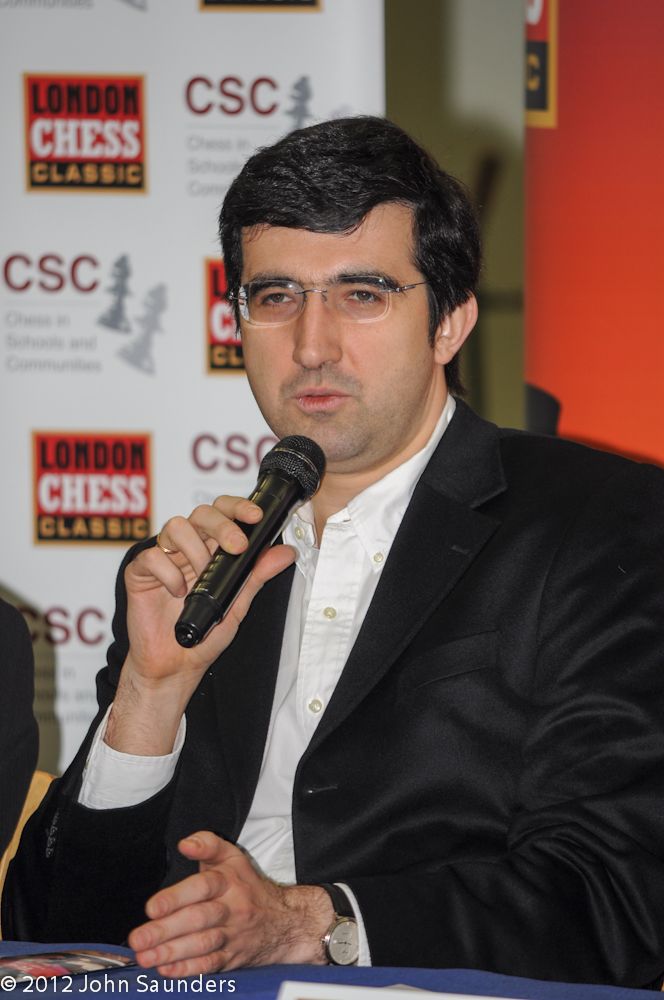
By that time Magnus and Judit had arrived from their photo-shoot and we moved to the press conference, with all nine competitors at the table with tournament director Malcolm Pein chairing. The press conference was streamed live to the vast internet audience. (You can still view it on our website.) Malcolm told us that in excess of 360,000 people watched the tournament online in 2011, and that we were hoping to exceed that in 2012. 

.
Malcolm told us about the success of the Chess in Schools and Communities charity which runs in parallel with the London Chess Classic, and which now funds chess teachers at 176 primary schools in England and Wales in 30 different areas of the UK, which we’re very proud of. This year we are encouraging the online audience to donate a small sum - one dollar/euro/pound per viewer - to the tournament to fund the charity and help ensure the continuation of the tournament itself. We’ll be providing details of ways to do this during subsequent live broadcasts and on the website.

.
We then moved to questions, from the online audience as well as the people in the room. The first came from an internet questioner with a Scandinavian name. Sitting on the immediate right of Magnus Carlsen, Malcolm was a little self-conscious about reading out the questioner’s name. After a tentative try at pronouncing it, he turned to the world number one for help. “Could he be a Norwegian with a name like that?” With immaculate comic timing, Magnus shot back: “Not the way you pronounce it!”. That brought the house down. A third career possibility for Magnus: after chess super-GM and fashion model... stand-up comedian? 

SECONDS OUT

As was revealed in the Norwegian press a couple of days ago, there had been problems getting Magnus’s Russian second a visa to enter the UK and Magnus faced the prospect of working on his own in London and only being able to contact his second via internet telephony. This was not the first time Britain’s slightly fraught diplomatic relationship with Russia had caused the tournament problems.

Malcolm was on the point of naming the Russian GM in question but he then remembered what had happened when he had tried to pronounce the Norwegian name. Instead of having a stab at pronouncing Yan Nepomniachtchi’s name, he turned to Magnus and said “I’m going to have pronunciation problems with Yan’s name, aren’t I? Do you know how to say that one?” A cunning attempt to turn the tables on Magnus, but the young man wasn’t falling for that trick. After a slight hesitation, he answered “I don’t know!” to another ripple of laughter. Malcolm had a valiant go at it but passed the microphone to Vlad Kramnik for a definitive Russian pronunciation. “I can do it better,” said Vlad. I can’t render the Kramnik pronunciation in print but it was something like ‘Nepomniashee’, with a very slight accentuation of the ‘om’ syllable, with the voice falling away on the subsequent syllables. More importantly, the visa story had a happy ending: Malcolm had used his diplomacy to persuade the Russians to issue Yan Nepomniachtchi with a visa and he should arrive on Saturday to start work with the world number one. 

THE TWITTER GAME

.
The players now proceeded to play a game against all-comers on Twitter, with the Classic competitors playing moves in a fixed sequence. Reverse alphabetical order was used, which meant that Judit Polgar had the honour of playing 1 d4 for the Classic stars on the giant chess set. I’m not entirely sure how seriously the players on Twitter were taking this, but it is fair to say that the Classic competitors treated it as a harmless bit of fun and took the opportunity to tease each other about their choices of move. It is reassuring to see that super-GMs are no different to ordinary club chessplayers in this respect. Once the game was utterly won, they showed a more sadistic side of their nature, spinning the game out for a few moves rather like a cat playing with a mouse.

The game was marred by a communications foul-up when a horrible blunder (15...e5??) submitted via Twitter failed to be weeded out by the somewhat haphazard system we were using to relay data and choose the world’s move (although, as a Twitterer pointed out, at least the blunder proved we weren’t cheating and using a chess engine). Maybe a brilliant chess computer programmer, like Mark Uniacke of Hiarcs, could design us a chessplaying engine/Twitter interface to remedy this technical problem and make it easier to handle the feed?

Nigel Short, like former British prime minister Gordon Brown before him, had promised to ‘save the world’ but the position after 15...e5 proved to be beyond even his chessboard lifesaving skills. Actually, it was probably a timely mistake as it allowed the super-GMs to escape and get some rest before the coming fray. The real fun starts tomorrow Saturday and you can follow all the action at the official website.

London Chess Classic 2012 Twitter Game

White:  London Chess Classic
Black:  Twittersphere


1. d4 Nf6 2. Bg5 e6 3. e4 h6 4. Bxf6 Qxf6 5. Nc3 Bb4 6. Qd3 d6 
7. O-O-O  O-O 8. Nf3 Nd7 9. Kb1 a6 10. g4 b5 11. g5 hxg5 12. Rg1 g4 13. Rxg4 e5 14. Nd5 Qe6 15. Rh4 Ba5 16. Ng5 Qe8 17. Qh3 g6 18. Rh8+ Kg7 19. Rh7+ Kg8 20. Nf6+ Nxf6 21. Qh6 Nxh7 22. Qxh7# 1-0


All photos in this post are © John Saunders